
Putting a Face on Online Shopping as eBay Live Opens New Doors for Small Businesses
Miami / Florida / November 20, 2026 / The $17 sheet set caught our attention. So did the Disney-themed blanket set we purchased for $14, a product listed for $32.99 at one of the nation’s largest retailers. But the bargains were only part of what made the experience interesting.
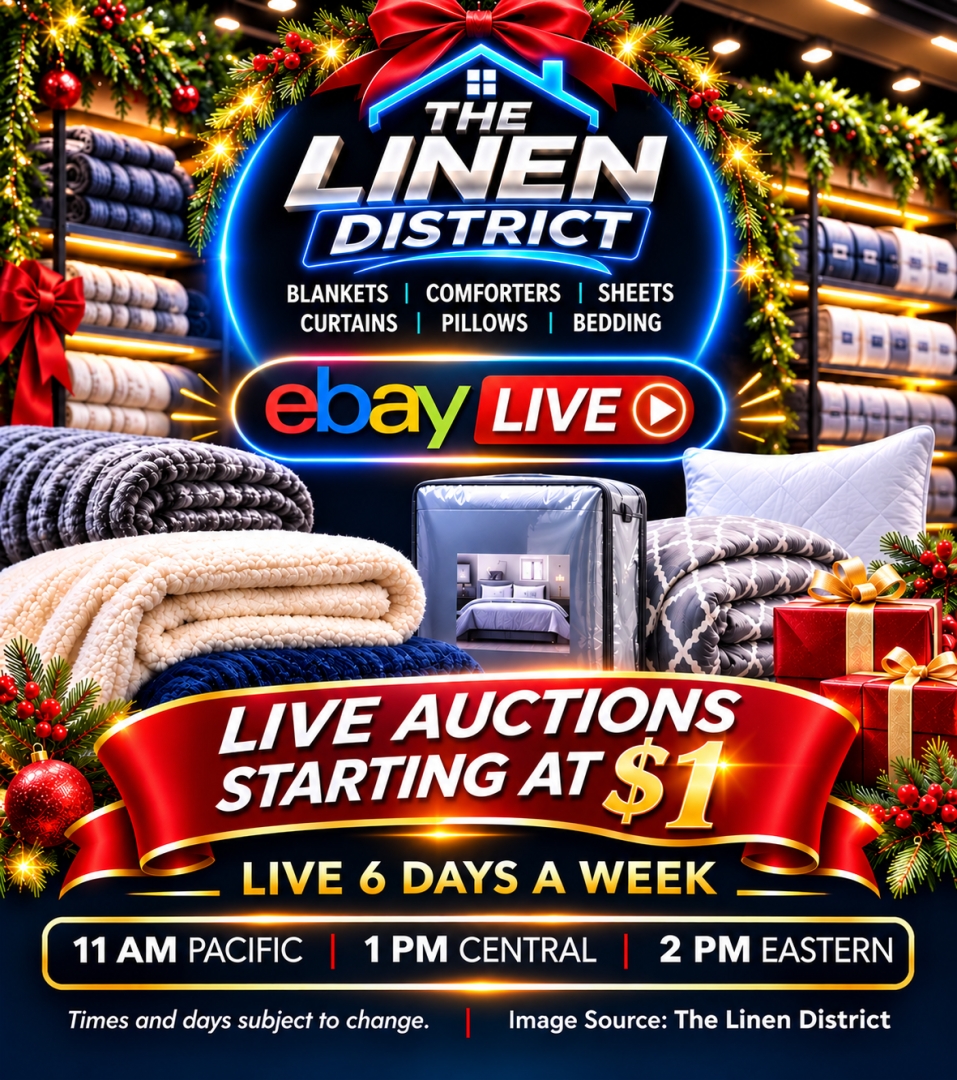
Our introduction to eBay Live came through The Linen District, an independent retailer that had been broadcasting for less than two weeks. We made a few purchases, kept watching, and became fascinated by something much bigger than discounted merchandise: how this new selling model could help small businesses compete while giving eBay itself a fresh way to attract and engage shoppers in an increasingly competitive online retail market.
What also became clear was that we were watching a small business do something that would have been difficult to imagine not long ago: reach customers across the country, present merchandise in real time, and build a recognizable identity in a marketplace crowded with millions of sellers. And it was doing all of this without the advertising budgets, technology investments, or infrastructure traditionally associated with national retailers.
For those still unfamiliar with how it works, eBay Live takes the traditional online shopping experience and makes it more personal and interactive. Rather than relying solely on photographs and written descriptions, sellers can demonstrate products, answer questions, and build relationships with customers in real time. And with no upfront fee to host a show, eligible sellers on eBay (NASDAQ: EBAY) can access a powerful selling platform without the expense of building one themselves.
Of course, reaching customers and earning their trust are two different things. A $100 sheet set offered for $20 or $25 may attract attention, but the real test comes when the merchandise arrives and customers decide whether the bargain was as good as promised.
That’s what made us want to revisit the business that first introduced us to eBay Live.
We reached out to thealways-energeticowner of The Linen District for his perspective on the opportunity this emerging model presents for independent retailers, the challenges of building a customer base, and how live shopping could help level the playing field in an increasingly competitive retail market.
Here’s what he had to say:
Q: You’ve been on eBay Live for about two weeks. What made you decide to give it a try?
TLD:
What caught our attention about eBay Live was the opportunity itself. Here was one of the world’s most recognized online marketplaces offering smaller businesses the ability to reach customers nationwide, present merchandise directly to them, and build an audience without having to invest in the kind of technology or advertising infrastructure that would normally be required.
That’s a pretty compelling proposition for an independent retailer.
We’re in a competitive business. People can buy sheets, blankets, towels, and household products just about anywhere, including some of the largest retailers in the country. So we have to give them a reason to shop with us.
What makes eBay Live different is that we’re not just putting merchandise on a website and hoping someone finds it. We can actually introduce ourselves, show people what we’re selling, explain the value, and have a conversation with customers while they’re making purchasing decisions.
And we’re doing all of that through a platform people already know and use.
Of course, having access to that audience doesn’t automatically mean people are going to buy from us. We’re still very new to eBay Live, and we’re learning what customers respond to, how to make our shows more engaging, and what it takes to build a following.
But that’s what makes the opportunity exciting. We have the tools to compete in a much bigger marketplace. Now it’s up to us to give customers a reason to come back.
Q: When someone sees a $100 sheet set selling for $20 or $25, isn’t their first reaction sometimes that it sounds too good to be true?
TLD:
I think that’s a perfectly fair reaction. If someone I didn’t know was offering me a $100 set of sheets for $25 or $30, I’d probably have a few questions myself.
But that’s actually one of the things that makes eBay Live so interesting. In a traditional online listing or seven-day auction, you’re relying largely on photographs, descriptions, and maybe some customer reviews. With live shopping, we can hold up the merchandise, show people the details, talk about the quality, and answer questions right there while they’re deciding whether to buy.
And that’s a tremendous advantage when you’re trying to introduce a new business to customers.
Of course, there’s only so much you can demonstrate through a camera. Until someone receives those sheets, opens the package, and actually feels the material, they’re still taking a chance on us. We understand that, and we take that responsibility seriously.
That’s why those first purchases mean so much. If someone spends $25 or $30 on a set of sheets and discovers they’re every bit as good as we represented, we’ve done something much more valuable than complete a transaction. We’ve started building a relationship.
And think about what that means the next time they see us live. Instead of wondering whether the merchandise is really as good as we’re saying, they’re remembering what arrived at their doorstep.
That’s how a small business starts building momentum. You give people a reason to take that first chance on you, you deliver what you promised, and hopefully they come back and bring someone else with them.
We’re not trying to win customers with one great deal. We’re trying to earn their business for the long term.
Q: We purchased a Disney-themed blanket set for $14 that was listed for $32.99 at a major national retailer. How important are those kinds of recognizable products in building credibility?
TLD:
I think recognizable merchandise is a tremendous advantage, especially when you’re introducing yourself to customers for the first time.
When someone sees a product they recognize from a major retailer, they already have a pretty good idea of what it should cost. So when we’re offering that same merchandise at a substantially lower price, the value proposition becomes pretty clear. We’re not asking them to take our word for what something might be worth. They have something familiar to compare it against.
But here’s where it gets interesting. That recognizable product may be what brings someone into our show, but it doesn’t have to be the only thing they buy.
Because we’re interacting with customers live, we can find out what else they’re interested in. Maybe they came for a blanket, but now they’re asking about sheets, pillows, or towels. We can respond to those questions, introduce other merchandise, and give them more reasons to stay engaged.
That’s a big difference from a traditional online listing. We’re not just waiting for someone to discover another product. We’re having a conversation that can lead them to something else they might need or want.
Of course, none of that matters if the merchandise doesn’t live up to expectations. If someone buys a recognizable product from us at a great price and they’re happy when it arrives, we’ve earned a little more of their confidence. And hopefully, that confidence carries over when we’re introducing products they may not know as well.
That’s really what we’re trying to build. We want people to come for the value, enjoy the experience, and feel comfortable shopping with us again.
Because for us, the goal isn’t simply to make that first sale. It’s to make sure it isn’t the last one.
Q: Is there a point where you have to sacrifice some profit early on just to prove yourself?
TLD:
Absolutely. And I think that’s something every small business owner has to understand. Sometimes the most valuable thing you get from a sale isn’t the profit. It’s the customer.
Look, we’re building something here. We’re introducing ourselves to people who may never have heard of The Linen District before, and we’re asking them to take a chance on us. So if that means offering some extraordinary deals and accepting a smaller margin to get that relationship started, we have to look at the bigger picture.
Think about it. A customer buys a set of sheets from us for $25, receives them, and realizes they got something they might have paid $100 for somewhere else. Now we’ve made an impression. Maybe they come back for towels or blankets. Maybe they tell a friend. Suddenly, that first sale becomes worth a lot more than whatever profit we made on the sheets.
Of course, you have to know your numbers. We’re running a business, not giving merchandise away. We have inventory costs, shipping expenses, selling fees, and all the other responsibilities that come with taking care of customers.
But there’s a difference between chasing a quick profit and investing in a customer relationship.
And that’s one of the things I find exciting about eBay Live. We can introduce ourselves to customers, offer them compelling value, and have a chance to earn their business again. We’re not spending enormous amounts of money on advertising just to get someone’s attention. We’re putting that value directly into the merchandise we’re offering.
If we do our job right, the customer gets a great deal, we earn their confidence, and hopefully that relationship continues long after the first package arrives.
That’s not sacrificing profit just to make a sale. That’s investing in the future of the business.
Q: Let’s talk about the economics. From what we’ve seen, eBay Live doesn’t charge an upfront fee to host a show, and sellers generally pay when they make a sale. How significant is that for a small business?
TLD:
This is where I think the opportunity gets really interesting, because eBay Live isn’t just giving us a place to sell merchandise. It’s giving us access to much of the technology and infrastructure that would be incredibly expensive for a smaller business to build on its own.
Think about what happens when someone buys something during one of our shows. Within seconds, we’re getting a notification that the sale has been processed. We have access to shipping labels, competitive shipping rates, and the information we need to identify exactly where that product is sitting in our inventory.
We’re not sending forklifts racing around a warehouse trying to figure out where somebody’s sheets are. We know what’s been sold, where to find it, and what needs to happen next.
And that’s just the beginning.
We can track orders, manage shipping, respond to customer questions, and follow up after the sale. So we’re not simply making a transaction and hoping everything works out. We have tools that help us manage the entire experience, from the moment someone clicks to buy until that package arrives at their door.
And for a small business, that’s a big deal.
People sometimes forget how much work goes into selling something online. Finding customers is only part of it. You have to process orders, manage inventory, arrange shipping, deal with questions, and make sure customers receive what they purchased.
Larger retailers have entire departments and expensive systems handling those things. We’re getting access to many of those same capabilities through an established marketplace.
Now, don’t get me wrong. We still have to do the work. We have to buy the merchandise, keep track of our inventory, pack the orders, and make sure customers are happy. eBay isn’t running our business for us.
But it gives us tools that let us spend less time worrying about the mechanics of every transaction and more time doing what actually grows the business: finding great merchandise, offering good value, and building relationships with customers.
And when you put all of that together, you start to see why this model can be such a game changer for independent retailers.
We don’t have to operate like a national chain to give customers the kind of shopping experience they expect from one.
Q: How much freedom do you have to decide when to go live, how long to stay on, and what products to feature?
TLD:
I’ll tell you, this might be one of my favorite things about eBay Live. We’re not locked into some rigid sales presentation where we’ve decided what customers are going to see and just hope they’re interested.
We can actually listen to them.
Let’s say we’re showing premium sheets, and for whatever reason, that’s not what people are looking for that day. Well, why keep pushing sheets? We can ask the people watching, “What do you want to see?”
If they say pillows, let’s bring out some pillows. If they want blankets, we’ve got blankets. Maybe someone asks about towels or curtains. Suddenly, the customers are helping shape the show, and we’re responding right there in front of them.
Think about how powerful that is for a small business.
A major retailer might spend weeks planning a promotion, deciding what merchandise to feature, and putting together an advertising campaign. We’re able to have a conversation with customers and change direction almost immediately.
And we’re learning something in the process. We’re finding out what people are interested in, what price points get their attention, and what products they want us to bring back.
That’s information businesses spend a lot of money trying to collect. We’re getting it directly from the people shopping with us.
There’s also the flexibility of the shows themselves. We can organize our broadcasts around our inventory and business needs, rather than having to buy expensive airtime or build a television-style production operation.
And here’s what I really like about it. Customers aren’t just sitting there watching us sell things. They’re participating. They’re asking questions, making suggestions, and helping us decide what comes next.
It’s almost like having a store full of customers telling you exactly what they’d like to buy, except that store can reach people all across the country.
For an independent retailer, that’s a pretty remarkable opportunity. We can be nimble, we can be personal, and we can respond to demand without having to go through layers of management to make a decision.
And sometimes, being able to move that quickly is a bigger advantage than having the biggest advertising budget.
Q: Does having your face on the screen change the responsibility you feel toward customers?
TLD:
Absolutely. And I’ll tell you something, when you’re the person standing in front of that camera, there’s no hiding behind a product description or a customer service department. That’s your face people are looking at, and that’s your reputation going out the door with every package.
If I’m telling someone they’re getting a terrific set of sheets at a fraction of what they’d normally pay, they’d better open that package and feel like they got exactly what I promised.
Because believe me, if they’re disappointed, they’re going to remember who sold it to them. And they should.
But I actually like that accountability. I think it’s one of the things that makes live shopping so different from the way people have become accustomed to buying online.
We’re not some anonymous seller with a product listing and a checkout button. People can see us, ask questions, and get a feel for who they’re doing business with. And over time, hopefully, they begin to trust our judgment.
It’s a little like owning the neighborhood store where everybody knows who’s behind the counter. You can’t sell someone something disappointing on Tuesday and expect them to walk back in on Friday acting as though nothing happened.
You have to stand behind what you’re selling.
And here’s the part I find exciting. That neighborhood store can now have customers from Kansas, California, Florida, or just about anywhere else in the country.
So yes, putting your face behind the merchandise creates more responsibility. But it also creates an opportunity to build the kind of personal relationships that can turn a small business into something much bigger.
And if customers remember my face because they got a great deal and loved what they received, I’m perfectly happy to be recognized.
Q: Do you think this model can genuinely help small businesses compete with national retailers?
TLD:
Absolutely. And I’ll tell you, I don’t think being a small business is necessarily the disadvantage people assume it is. In some ways, especially with a platform like eBay Live, it can actually work in our favor.
Look, we’re not going to outspend Walmart (NYSE: WMT) or Target (NYSE: TGT) on advertising. We’re not going to open a thousand stores or hire an army of people to manage every aspect of the business. And frankly, we don’t need to.
What we can do is move quickly, offer tremendous value, and build personal relationships with customers. When someone comes into one of our shows, they’re not dealing with a corporate advertising campaign. They’re dealing with us. They can ask questions, tell us what they’re looking for, and get an answer right there.
And if they want to see something different, we can respond. We don’t need three management meetings and a marketing committee to decide whether we’re going to show pillows instead of sheets.
That’s a pretty nice advantage to have.
Now, I’m not suggesting that simply turning on a camera is going to make every small business successful. You still have to know your numbers, find good merchandise, manage inventory, ship orders, and make sure customers are happy. There’s plenty of work involved, and you have to get those things right.
But here’s what’s changed. We now have access to a marketplace and technology that allow us to compete for customers without having to match the size or spending power of the companies we’re competing against.
And for a business like ours, we don’t need millions of customers to make this worthwhile. We need to build a loyal following of people who enjoy shopping with us, appreciate the value we’re offering, and keep coming back.
That’s how a small business grows into something bigger. Not by trying to become the next national retail chain overnight, but by earning customers, building momentum, and making the most of the opportunities in front of us.
And that’s exactly what we’re trying to do with The Linen District.
Q: You’re still in the very early stages. What would success look like for The Linen District a year from now?
TLD:
I’ll tell you what I’d really like to see a year from now. I’d love to have a community of customers who genuinely enjoy shopping with us, know they can trust what we’re selling, and aren’t shy about telling their friends and family where they found a great deal.
Look, nobody needs a new set of sheets every Tuesday. We understand that. But think about what we’re selling. Sheets, towels, blankets, curtains, and all kinds of things people use in their homes every day. These aren’t products people buy once in their lifetime and never need again.
So our opportunity isn’t just to sell someone a set of sheets today. It’s to become a place they think about the next time they need something for their home.
And here’s what’s really exciting for us right now. We’ve made a lot of sales in a very short period of time, and we’re just getting to that first wave of customers actually receiving their merchandise.
That’s a big moment.
We’ve been on these shows holding up products, talking about quality, showing people the value, and asking them to take a chance on us. Now they’re opening those packages, putting their hands on the merchandise, and deciding whether we delivered what we promised.
And I’ll tell you, we’re pretty excited about that part because we’re confident in what we’re selling.
Think about someone who just received a beautiful set of sheets, and they paid a fraction of traditional retail. Maybe they expected something decent for the price, but when they open the package, they realize they got something much nicer than they anticipated.
What’s the first thing they’re going to do? Hopefully, they’re going to tell somebody.
Maybe it’s a friend, a neighbor, or someone in their family. “You’ve got to check these people out. I just bought a set of sheets for $30, and I can’t believe how nice they are.”
You can’t put a price on that kind of recommendation. You can spend a fortune on advertising, but when somebody you trust tells you they found something terrific, that carries a different kind of weight.
And that’s really what we’re hoping to build.
Sure, we’d love to be doing a lot more shows, reaching more customers, and growing sales a year from now. But the thing I’d be most proud of is having people come back because they enjoyed shopping with us and were genuinely happy with what they received.
Because if we can get that part right, the rest has a way of following.
We’re still a small business, and we’re still at the beginning of this journey. But eBay Live has given us a chance to reach people we might never have reached otherwise.
Now it’s our job to make sure that when someone takes a chance on The Linen District, we give them every reason to do it again.
And if we can accomplish that, I think we’ll look back at these first few weeks and realize we were building something much bigger than we imagined.
________________________________________________________________________
A Bigger Stage for Small Business
What makes eBay Live interesting goes well beyond the bargains. It’s the combination of technology, accessibility, and personal interaction that’s changing what independent retailers can accomplish.
For eBay, it’s an opportunity to bring new energy to a marketplace competing for shoppers in an increasingly crowded retail environment. For small businesses, it’s access to an established audience, transaction and fulfillment tools, and the ability to respond to customer demand in real time, without the enormous upfront investment traditionally associated with reaching a national market.
The Linen District is still in its earliest days on the platform, and its long-term success will depend on the quality of its merchandise, the experience it delivers, and the customers it earns along the way.
But that’s what makes the model worth watching.
Technology is giving smaller retailers access to capabilities once reserved for much larger companies, while allowing them to compete on something that can’t be measured in dollars alone: the personal connection between a business owner and a customer.
For eBay, that could be an important competitive advantage. For independent retailers willing to put themselves in front of the camera and earn their customers’ trust, it could be the beginning of something much bigger.
About Hawk Point Media | Editorial Disclosure: Hawk Point Media produces independent editorial features exploring businesses, emerging technologies, and market opportunities. This article was prepared solely for informational and journalistic purposes, without compensation, sponsorship, or other consideration from eBay, The Linen District, Millennium Connection, or their affiliates. All purchases referenced were made independently at the author’s expense.
Media Contact
Company Name: Hawk Point Media
Contact Person: Editorial Dept.
Email: [email protected]
City: Miami Beach
State: Florida
Country: United States
Website: https://hawkpointmedia.com/


